
Trenton Sources for Previous Residents
The best Trenton address history combines sources that cover different eras. Recorded land records follow ownership and legal descriptions. Directories and phonebooks can place people at an address in a particular publication year. Census schedules add household context, while maps, permits, and newspapers help explain a change. The table gives an era-based starting packet; it does not mean every source covers every street or person.
| Address-history source | Years it reaches | Trenton access | What it can establish |
|---|---|---|---|
| Mercer deeds and related instruments | County records from 1838; scanned deeds reported from January 1839 | Clerk index, Records Room, archives | Parties, transfer date, consideration, legal description |
| Trenton city directories | 1845–1971, with year-level gaps | Trentoniana hard copy or microfilm | Address, occupation, household-style entry |
| Telephone directories | 1925–1970 microfilm, selected runs through 2020 | Trentoniana | Address and phone listing in the specific volume |
| State and federal census | Trenton state rolls 1895, 1905, 1915; federal release varies | Trentoniana and archive databases | Household details for an enumeration date |
| Permits and code files | When retained for the named property | Trenton Inspections counter or focused OPRA request | Property event, application, or inspection history |
Start with a recent deed if the owner and parcel key are known. Start with a directory or phonebook if the question is about who lived here before. When an older address does not match a modern number, pull a map before discarding the record.
Note: The year and custodian matter as much as the name because each address source captures a different point in time.
Trenton Address History Starts with a Parcel
For recent previous residents research, establish the physical situs, municipality, block, and lot first. The City of Trenton assessment record and tax map can provide the operational parcel key. NJGIN Property Explorer is useful for address, county, municipality, block, and lot orientation, but it redacts owner names. The former Mercer Property Information Portal is closed to public users, so the municipal counter and Clerk records are the documented next routes.
Keep situs and mailing address apart. Situs identifies the land and connects to permits or mapping. A tax mailing address may belong to a company, trustee, agent, former owner, or another address. That distinction matters when researching past residents, since an ownership record alone cannot establish every household member.
Mercer’s Scanned Books and Trenton Deeds
The Mercer Clerk’s 2023 preservation notice reports 1,214 books and more than one million historic property records scanned, including deeds dating to January 1839. That is a valuable digital route for past residents research, but image access is document-specific. The public index can display restricted-image or no-image states, and an older Clerk handout described online property searching as approximately 1997 forward at that time. Check the actual result rather than promising one fixed online cutoff.
The public Records Room remains open weekdays from 8:30 a.m. to 4:30 p.m. It has maps for all Mercer municipalities and subdivision materials. For an older request, provide the address, approximate purchase date, block and lot if known, and owner name. State Archives microfilm and FamilySearch digitization are additional historic channels, not proof that every image exists in each one.
Note: Online indexing, scanned image access, and archival microfilm have different coverage, so check the record itself before relying on a date range.
Tracing Trenton Past Owners Through Deeds
The deed chain begins with the latest recorded transfer tied to the parcel’s legal description or block and lot. In the Mercer search, use Town set to Trenton with Lot and Block, legal description, a party, or a document-type and date filter. A deed result can provide the instrument number, recording time, book and page, consideration, party roles, legal text, linked documents, and documents referring to that instrument.
- Record the present parcel’s situs, block, lot, and legal description from Assessment or the map.
- Find the most recent relevant deed in the Mercer index and save its recording details.
- Read the seller, then search that person or entity as an earlier grantee for the prior acquisition.
- Repeat with the same legal description and parcel key, checking name variants and linked instruments.
- When an image or older record is unavailable online, move to the Records Room, request route, or State Archives microfilm.
- Grantor and grantee
- The grantor transfers an interest; the grantee receives it in the recorded document.
- Chain of title
- The sequence of recorded transfers linked by parties and the same land description.
- Legal description
- The deed’s land identifier, often using block, lot, plat, or metes and bounds, which outlasts a changed street number.
- Criss-cross directory
- An address-oriented directory section, when a particular volume includes one, used to look from street to an historical listing.
The Mercer Official Records Public Search appears in this page-specific reference image.
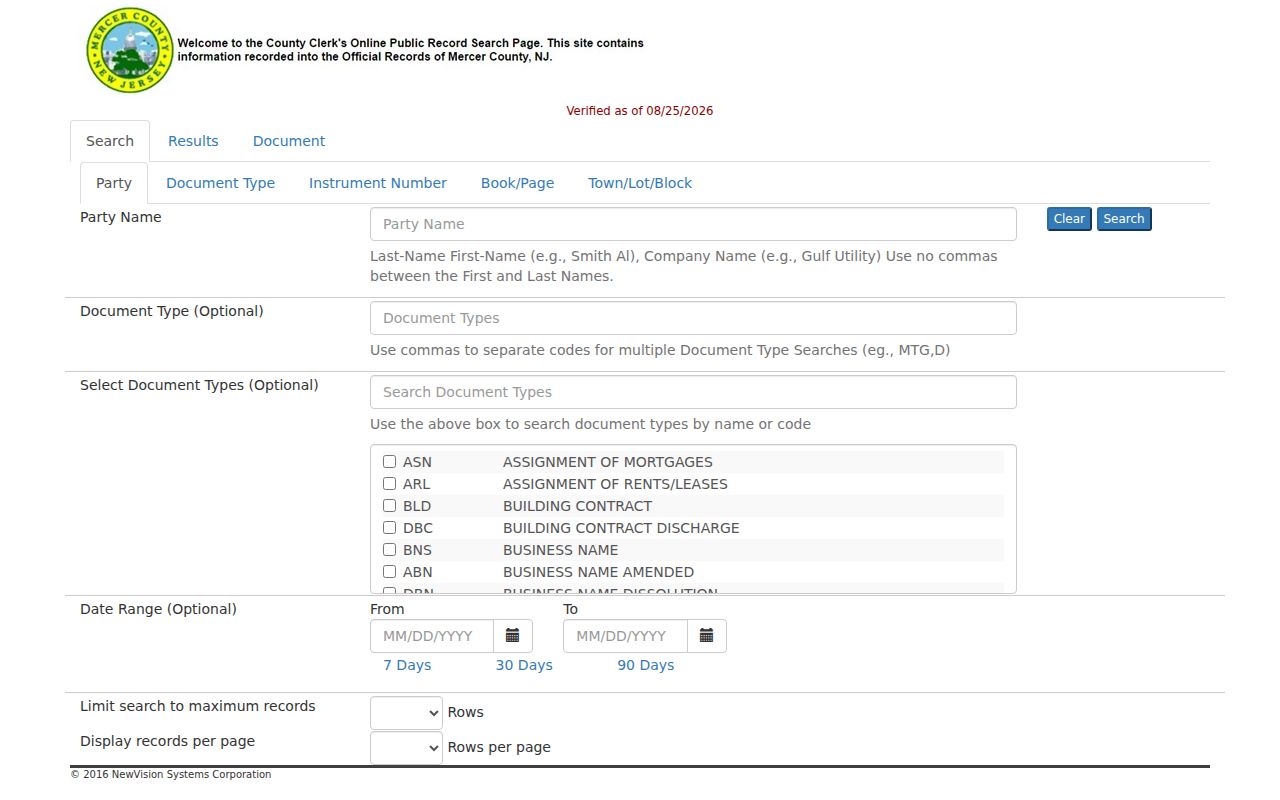
The index is a route to the recorded document trail, not a title opinion and not proof of current occupancy.
Sanborn Maps Bridge Trenton House Numbers
Trentoniana’s Sanborn maps show both current and previous house and block numbers. That local quirk can rescue a past-residents search when a directory address does not fit a modern parcel. The library lists 1874, 1882, 1927, and later corrected Sanborn material, alongside the 1886 atlas, 1905 map, and 1930 real-estate atlas. Match the map’s date to the directory year before drawing a conclusion.
No official source inspected states one citywide Trenton renumbering year. A changed-looking number should therefore be treated as a map and legal-description problem, not as evidence that the earlier entry is wrong. Subdivision, merged lots, a changed street name, and the difference between postal city and municipality can all interrupt a simple address trail.
Note: Compare a Sanborn map with the directory edition from the same period before linking an older number to a current parcel.
Pairing Trenton Directories with Census Years
Directories can show an address in a publication year. Census rolls capture a household on an enumeration date. Pair two or three consecutive city-directory years with the nearby census instead of assuming either one is complete. Trentoniana lists state census microfilm for 1895, 1905, and 1915, plus selected federal New Jersey rolls. The federal census follows the 72-year public-release rule, so later material can remain closed.
When the city-directory shelf has a gap, use the Trenton and Vicinity, Suburban Trenton, or Mercer County phonebook runs for the matching geography. Newspapers can add a death, marriage, move, or organization notice. The collections themselves are described on the Trenton City Directory page; use them here as dated household evidence.
The New Jersey State Archives genealogical collections provide a separate historical search route.
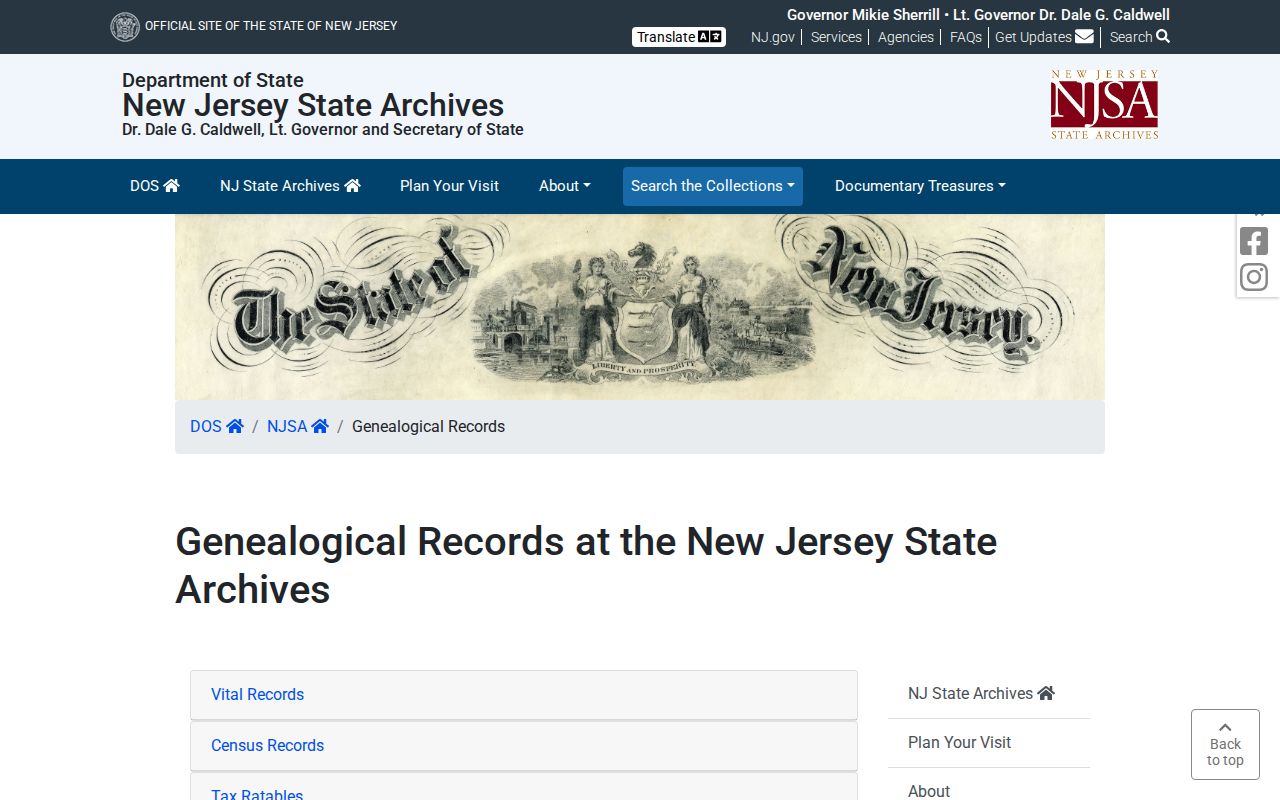
Archives holdings complement the local library and county records, especially for older Mercer deeds, estate files, census, and naturalization research.
Trenton Past Households Beyond Ownership
Past household entries are not the same as previous owners. A directory or phonebook can place a person at an address in a specific edition, but an address section or criss-cross feature must be verified in the actual volume. Census schedules may include people absent from a directory, and a deed may name only a transfer party. Preserve spelling, address, occupation, spouse notation, abbreviation key, and page with each historical entry.
Obituaries, cemetery evidence, newspapers, and probate papers can help explain the end of an address trail. Trentoniana has newspaper microfilm, while Mercer Surrogate files and State Archives estate microfilm are custodian or archive routes for an estate question. The Locust Hill and Mercer Cemetery history supports careful newspaper and burial research, not a claim of a complete online interment list.
Lawful use. Trenton previous residents research is for house history, family history, estate questions, and personal curiosity. Do not use an address trail to harass, follow, threaten, or harm a living person.
Note: A historical household listing remains a dated record and does not establish where a person lives now.
Trenton Records Requests for a Broken Trail
A missing online record does not end an address history. The Trenton Inspections Department can handle a historical permit application through its counter, and a narrowly described City request can specify the address, permit type, year, and record wanted. Mercer’s Records Room provides the land-record fallback. Trentoniana accepts focused remote research inquiries, while the State Archives offers mail or in-person channels for many historic collections.
Ask a custodian for the correct record series and access method. Do not ask staff to identify a private household or render a title opinion. Clear requests and the same parcel key used in the deed, map, and directory research make an old Trenton address far easier to verify.