
Find a Trenton Street by Address
For a Trenton street search, begin with the property rather than a person’s name. The physical address leads to a situs address and then to a tax block and lot. Those identifiers are more stable than a street number when parcels were merged, split, or renumbered. A recorded owner, a tax mailing address, and an address-directory entry answer different questions. None alone establishes a current household. The most dependable result is a set of matching records held by the office that created it.
- Enter the address in NJGIN Property Explorer, select Mercer County and Trenton, and capture the situs, block, and lot.
- Use the map view for street geometry and nearby parcel IDs. If local layers or data are needed, Trenton directs researchers to request DataViewer access or GIS data through the City.
- Search the Mercer Official Records Public Search with Town, Lot/Block, legal description, or a party route for the recorded-document trail.
- For voter information, distinguish the State self-status check from a Mercer voter-list request. The self-check is not a public street browser.
- For earlier occupants, ask Trentoniana staff for the address or criss-cross section in the precise city-directory or phonebook volume.
Use that sequence of checks. A corner parcel, vacant lot, or subdivision can interrupt numerical order, so compare each situs and parcel ID rather than assuming adjacent house numbers share a tax lot.
Trenton Parcel Start by Address
The City Division of Assessment maintains tax maps and records changes in ownership or property character. Its public materials do not expose a current open owner-and-address form. The former Mercer Property Information Portal, often called PIP, is closed to anonymous and registered public users because of Daniel’s Law. That closure matters: the public path is no longer an owner-name search on PIP. Start with the map and take the block and lot to the municipal assessor, an authorized route, or the Clerk’s official search and Records Room.
- Parcel
- A mapped unit of land identified for tax and record purposes, usually by block and lot in Trenton.
- Situs address
- The physical location of the parcel. It is the useful key for map, permit, and street work.
- Mailing address
- The address for tax correspondence. It can belong to an agent, estate, or nonlocal owner and is not proof of occupancy.
- Plat
- A recorded map that can tie a street-facing parcel to a subdivision, lot, and legal description.
- Criss-cross directory
- An address-first directory section that can place a past household or business at a location in a particular year.
City Assessment is at 319 E. State Street, Room 126, and is open Monday through Friday from 8:30 a.m. to 4:30 p.m. Its Division of Assessment page identifies the municipal office for tax maps and current parcel questions. For a targeted current card, request only the needed address, block, lot, and record fields.
Note: A Trenton mailing label can also occur outside the city, so confirm the municipality and situs before treating a street result as a City of Trenton parcel.
NJGIN and the Trenton Street Map
NJGIN Property Explorer remains a useful orientation tool after the PIP closure. It accepts address, county, municipality, block, and lot searches. Its hosted parcel data and map services redact owner names under Daniel’s Law. That redaction is intentional, not evidence that the parcel lacks an owner record. Use the street view to find geometry, parcel boundaries, and the legal tax identifiers, then move to the municipal assessor or Clerk for the appropriate record.
The Mercer County GIS viewer is another live map route. The documented use is map browsing, address or parcel selection, parcel identification, and layer controls. No official source captured a public buffer or radius tool, so do not rely on a promised automatic neighbor radius. Trenton’s own DataViewer is interactive, but access instructions say to email T Long; data requests go through City OPRA.
The Mercer GIS viewer shows the parcel context used in a Trenton address search.
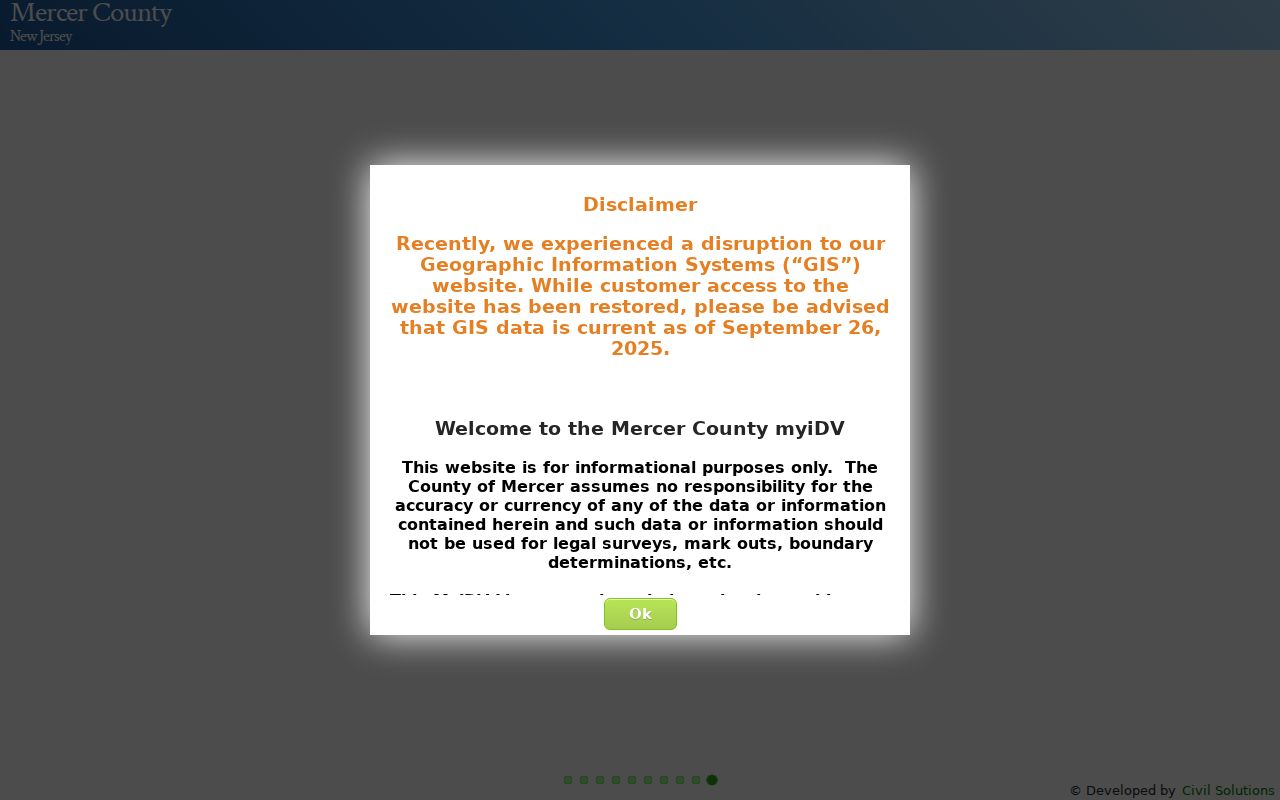
Read the map as an orientation layer. It provides a route from a street address to parcel identifiers, not a public claim about every person at an address.
Mercer Fields for Trenton Street Parcels
Once a block and lot are known, Mercer’s official records screen offers several ways to narrow a search. Town, Lot/Block, and legal-description routes are especially useful when walking a Trenton street parcel by parcel. Party Name uses a last-name first-name format with no comma. Document Type and dates can keep a broad result set manageable. The index can expose metadata even where an image requires a login, payment, or remains restricted.
| Mercer search field | Format | Use for a street parcel |
|---|---|---|
| Town | Optional dropdown | Select Trenton before comparing a parcel or street result. |
| Lot / Block | Optional text fields | Use the tax-map identifiers to focus the recorded-property search. |
| Legal Description Line 1 | Optional free text | Match wording from a deed, plat, or prior result. |
| Party Name | Optional text | Enter last name then first name, without a comma, when tracing a recorded party. |
| Document Type and date range | Optional controls | Focus on DEED or another documented type and constrain the time span. |
| Book / Page or instrument number | Optional text fields | Open a known document or continue a chain from a prior record. |
Search results can show the instrument number, recording date and time, book and page, consideration, legal description, party labels, linked documents, and image status. The page provides maximum-record and rows-per-page selectors plus Print Results, but its static form does not promise a CSV export.
Note: Use the same block and lot in each search step because street text alone can return a broad or mismatched parcel set.
Trenton Street Records by Address
Each Trenton street record has a narrow purpose. Use the municipal assessor to ask about a current parcel record and tax map, the map viewer to orient the street, and the Clerk index for recorded land documents. The voter route and the library address shelf supply different kinds of evidence. A permit request can describe work or an inspection event, but it is not a household list. This division keeps an address search tied to the right custodian.
| Address-keyed source | Trenton or Mercer keeper | Useful result | Documented access |
|---|---|---|---|
| Tax map and assessment record | Trenton Division of Assessment | Situs, block, lot, assessed-property details, and tax-map context | Assessment office or authorized current route |
| Parcel map | NJGIN and City GIS/DataViewer | Geometry, municipality, block, lot, and available map context | Free NJGIN search; City access or OPRA request as directed |
| Deeds, plats, liens, and related filings | Mercer County Clerk | Recorded parties, legal description, instrument, and document trail | Free index; image, copy, and counter access vary |
| Voter registration material | Mercer Superintendent of Elections | Lawfully released registration fields, subject to redactions | Self-status check or OPRA list request |
| Permit and code material | Trenton Inspections Division | Address-specific work, inspection, zoning, or code event | Counter request or focused OPRA request |
| Address directories and phonebooks | Trentoniana | Historical address occupants or businesses in a dated volume | In-room use; targeted remote inquiry available |
For the full historical shelf of volumes and their dates, use the Trenton city directory collections. Keep the publisher and year next to every address hit because directory entries are snapshots, not current proof.
Deeds Along a Trenton Street
A deed trail follows the parcel, not the apparent sequence of house numbers. In Mercer Official Records Search, begin with Town=Trenton and the lot/block or legal description. Open the latest relevant deed, note its instrument number, recording date, book/page, direct and indirect parties, consideration, legal description, and linked documents. Then search the seller as an earlier grantee, while keeping the parcel identifiers in view. This is a document trail, not a title opinion.
The Clerk’s Records Room at 209 South Broad Street is open weekdays from 8:30 a.m. to 4:30 p.m. It has paper maps for the county’s municipalities and subdivisions. Staff may help a visitor learn the computerized index but cannot conduct a title search. For older or pre-1997 requests, the research record calls for a phone or mail inquiry with a complete address, approximate purchase date, owner name, and lot/block. State Archives microfilm through 1900 and FamilySearch digitization provide additional channels where a portal image is unavailable.
Mercer’s preservation work scanned 1,214 books and more than one million historic property records, including deeds back to January 1839. It expands the historical route, but it does not guarantee that every image is unrestricted or online.
Note: A deed identifies a recorded transaction party, so check the document date before treating it as present address evidence.
Trenton Street Permits and Alerts
Trenton’s Inspections Division is the fallback for an address-specific permit or inspection question because no public permit or code-case index was located. The City FAQ says a historical permit application can be obtained from the department. A focused OPRA request should state the address, permit type or event, approximate year, and the record wanted. The City’s OPRA process uses its adopted request form and says available records normally receive a response within seven business days.
The Trenton Inspections directory identifies the address-based office route.
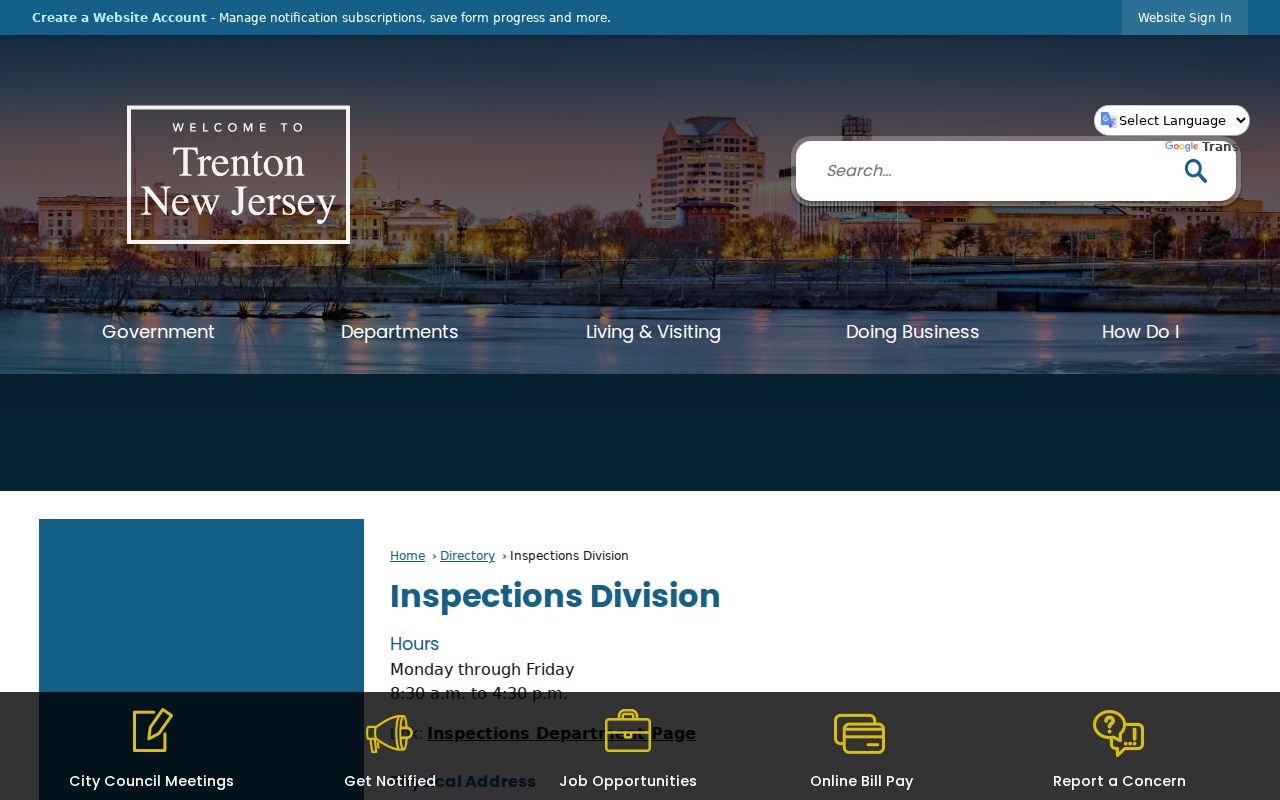
Use an inspection file as evidence of a property event. It should not be treated as a complete record of everyone connected with the address.
Mercer’s Property Alert lets a registrant monitor a municipality, block/lot, legal description, and optionally a party name. The County says each name variation must be entered separately, such as a name with and without a middle initial. Alerts report matching recordings and do not establish who is currently present at a property.
Historic Trenton Street Number Clues
An old directory address may not match a modern parcel at first glance. Trentoniana’s Sanborn maps can show current and previous house and block numbers, making them a documented bridge when numbering or street naming has changed. The research did not verify a single citywide renumbering year. Instead, compare the relevant Sanborn sheets, historic atlases, the current tax map, and the deed’s legal description before deciding two numbers represent the same place.
Trentoniana holds city directories from 1845 through 1971 as well as separate telephone-book runs and local maps. Most special-collection material is in-room use only, copying and scanning are discretionary, and a short research-inquiry form is available for remote questions. Ask for a targeted name, year, and address rather than assuming an address section exists in every volume.
The City GIS and DataViewer instructions describe the City’s controlled access path for local mapping.
When the map route is not publicly exposed, a City contact or an OPRA request is the documented alternative rather than a substitute search service.
Note: Record the directory year and map edition beside each address, since a correct historical hit may use a different number from today’s parcel.
Trenton Street Voter and Library Layers
New Jersey’s “Am I Registered?” tool is a self-status lookup, not a browse-by-street directory. Mercer voter registration lists follow a different channel. The county asks an OPRA requester for a name, address, the particulars of the request, and a statement that the material will not be used for commercial purposes; Title 19 fee authority is cited by the county. Released fields remain subject to statutory redactions, and an ordinary voter list does not reveal anyone’s ballot choices.
For a past street rather than a current one, Trentoniana’s address sections, city directories, and phonebooks are more direct. Ask staff whether the target year has an address-to-occupant or criss-cross section and request the publisher’s abbreviation key. The separation matters: a dated directory can support a historical household question, while an ownership document can establish a recorded transaction.
Trenton Street Access After PIP Closure
The access change is central to a current Trenton street directory search. Mercer states that its former Property Information Portal is closed to anonymous and registered public users because electronic sharing of protected property-address information can create Daniel’s Law liability. NJGIN still supplies address, county, municipality, block, lot, and map orientation, but its owner names are redacted. The alternative is not to infer an owner from a map. Use the municipal assessment route, the Clerk’s Official Records Search, or the Clerk’s Records Room.
The Mercer Property Alert registration page shows the official county service for watching future matching recordings.
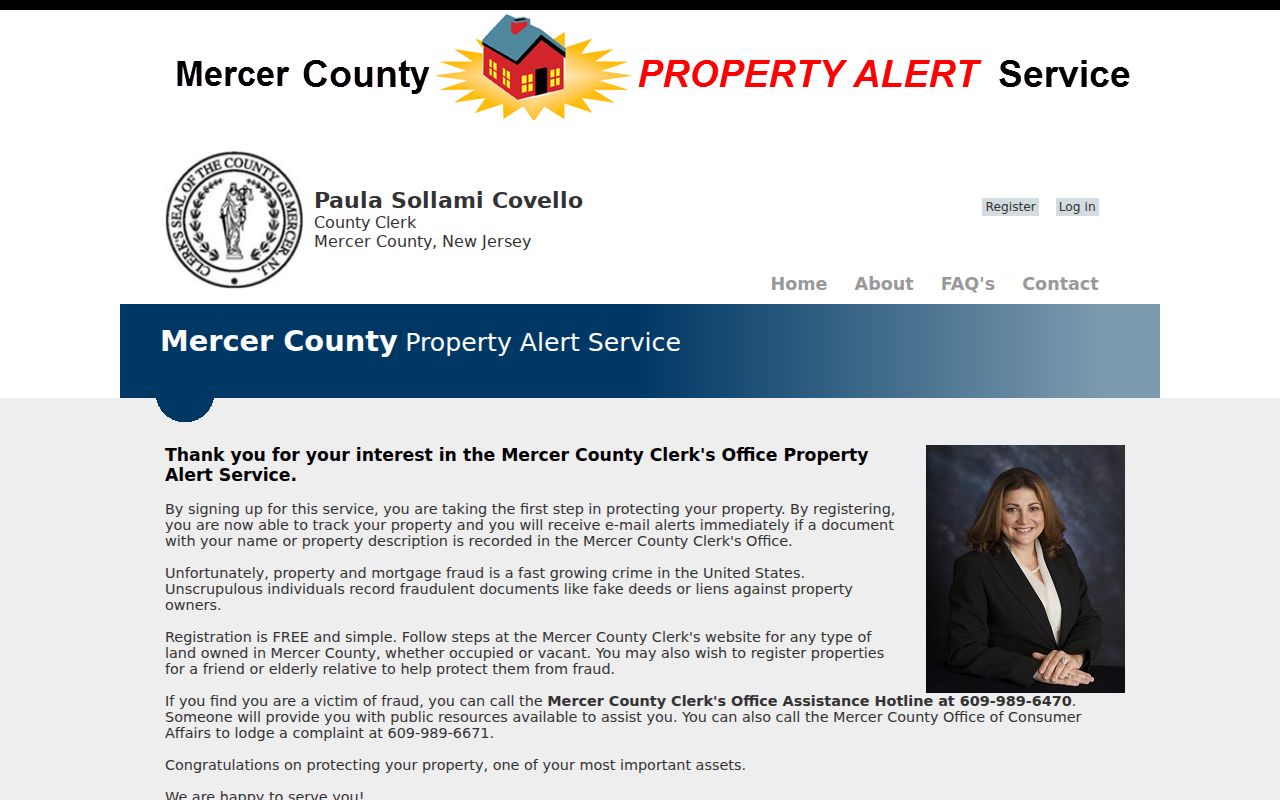
Property Alert is useful for record monitoring, while the Clerk index and counter remain the documented routes for inspecting existing recorded land material.
Limits of a Trenton Street Directory
Address records do not create a complete public household roll. They may show a recorded property party, tax correspondence, a historical directory entry, or a lawful voter-list field, each at a particular time and for a particular purpose. Private utility, delivery, and MVC personal information are not ordinary public sources. An unavailable or blank field can also reflect statutory redaction rather than the absence of a person from a neighborhood.
Daniel’s Law can protect covered officials and immediate household family members by removing home-address and unpublished-home-telephone information from public government websites. The New Jersey Address Confidentiality Program may provide eligible participants a substitute address for future agency exposure. OPRA also requires redaction of specified personal identifiers and protected addresses.
Lawful use. Use Trenton address records for personal, family-history, property, civic, or safety research. Never use them to follow, threaten, harass, intimidate, or harm another person.