
Trenton Record Match Types
Every Trenton record serves one narrow purpose. Tax and assessment rolls tie a party to a parcel and its tax mailing address. A recorded deed names the parties to a transaction and carries the legal description. Court results give a party role, venue, docket number, and dates. Voter status checks one person's registration. A vital record, by contrast, can establish a historical family fact. None of these alone proves someone lives at an address today. Before treating a hit as a match, weigh the date. Weigh the municipality and the role the record actually shows too. Two agreeing sources beat one convincing one.
| Record | What It Can Confirm | Trenton or State Custodian | Documented Access |
|---|---|---|---|
| Assessment or property card | Owner of record, parcel, situs, tax mailing address, and assessment clues | Trenton Division of Assessment and NJGIN | Counter or authorized route; statewide parcel owner names are redacted |
| Recorded deed | Grantor, grantee, recording date, consideration, legal description, and block/lot | Mercer Clerk Official Records Search | Public index; image or document access may require login, payment, or the records room |
| Voter status | A named voter’s registration status and voting jurisdiction | NJ Voter Information Portal | Self-status check; Mercer voter lists use the County request route |
| Court docket | Party role, venue, case caption, initiation, and disposition | NJ Courts Public Access | Free inquiry; copies and closed files go through the proper clerk |
| Vital record or index | Historical birth, marriage, death, or family connection | NJ Department of Health, local registrar, or State Archives | Current records are restricted; historical index and archive channels differ |
| Credential or business filing | License status, entity role, registered agent, or filing address | NJ DORES and Consumer Affairs verification | Online status, certificates, and copies vary by register |
Begin with the source that fits the fact you already hold. A parcel address leads to assessment records. It also leads to deed records. A case number leads to the docket. A former school year points toward Trentoniana yearbooks. It points toward directories, too. A similar name alone stays a lead. It stays a lead until an independent source agrees.
Trenton Court Record Matches
Name a Trenton party and the NJ Courts public-access route can work from there. It offers searches by party name, docket number, or judgment. Short entries matter here. Two-character first or last-name searches run exact, while three or more characters widen the net. If the name is common, narrow it down. A middle initial, a county or venue, and date criteria all help trim the results.
A Trenton court match can list the name, venue, docket number, case caption, and the date the case began. Open a docket and you may see its status or disposition, though inquiry access stops short of the actual filed-document images. Closed or archived matters take a different path. Those go through the court-record request route instead.
| Public Access Field | How It Works |
|---|---|
| Search by Party Name | Searches an individual or business party. |
| Individual Last and First | Both are required in the sample; the length rule changes how broadly results return. |
| MI | Optional middle initial for separating similar names. |
| County or Venue | An optional refinement; the sample results display venue. |
| Case or Date Criteria | Optional filters used with the party name. |
| Docket Route | Uses case division, county, docket type, number, and year where required. |
The NJ Courts electronic public-access page is shown in the official screenshot below.
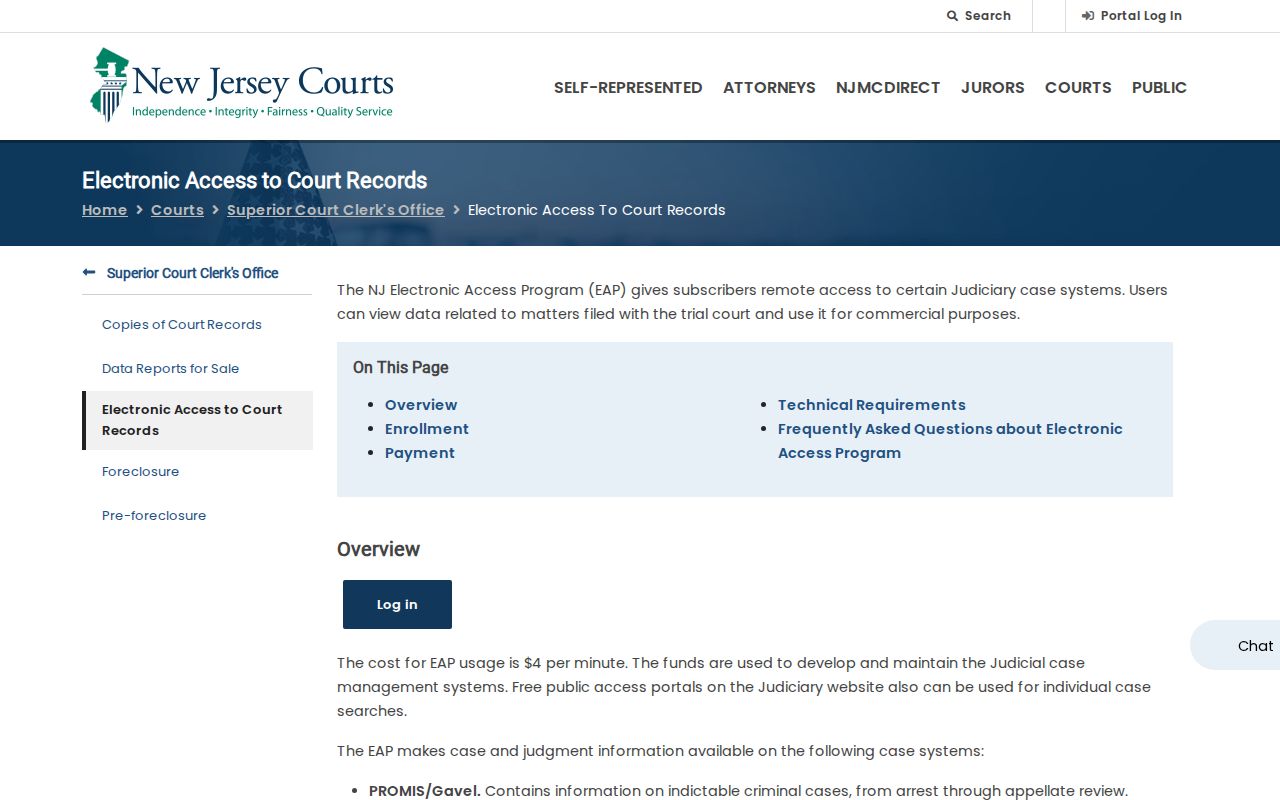
Copy the docket and venue from the result screen. Then request the record from the court that holds it. The court system warns that restricted case parts stay hidden from an ordinary public searcher. For municipal matters, the Trenton form center supplies a Court Records Request form. It also supplies a Court Transcripts Request form. That local route helps when a short docket entry cannot answer the question.
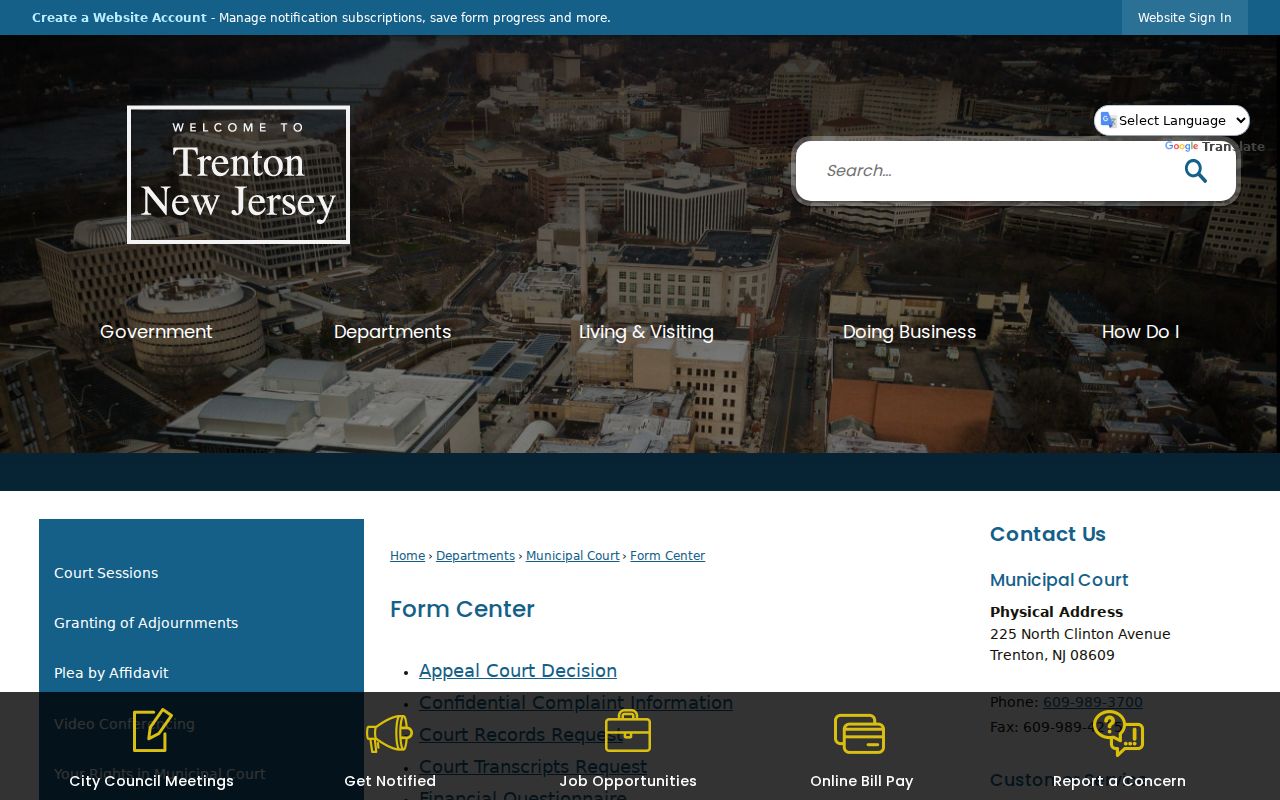
Read the party role and the disposition before leaning on any Trenton court result. A case proves a name, a date, and a court connection. It does not prove a current Trenton address. Sample docket details can include the fields below. A document list is not the same thing as a pleading image.
- Matched party name, venue, docket number, and case caption.
- Case initiation date, case type, and case status or disposition.
- Demand amount, judge, jury-demand indicator, and scheduled proceedings where shown.
- Litigant statuses, attorneys, motion dispositions, and a statewide lien indicator where applicable.
- Document listing and orders, without assuming public access to the filed-document text or images.
Federal Trenton matters run through PACER, the federal court's account-based docket system. Search results and documents carry per-page charges. Check the official fee table before ordering anything.
Trenton Voter Record Status
The State's Am I Registered? link is a self-status tool. It is not a public household roster or a browse-by-street directory. Trust the status, address, or precinct information the official tool displays. Trust nothing more. An inactive status can simply mean returned mail or a move notice. It does not prove the person left Trenton. The official voter-status form is the tool to use.
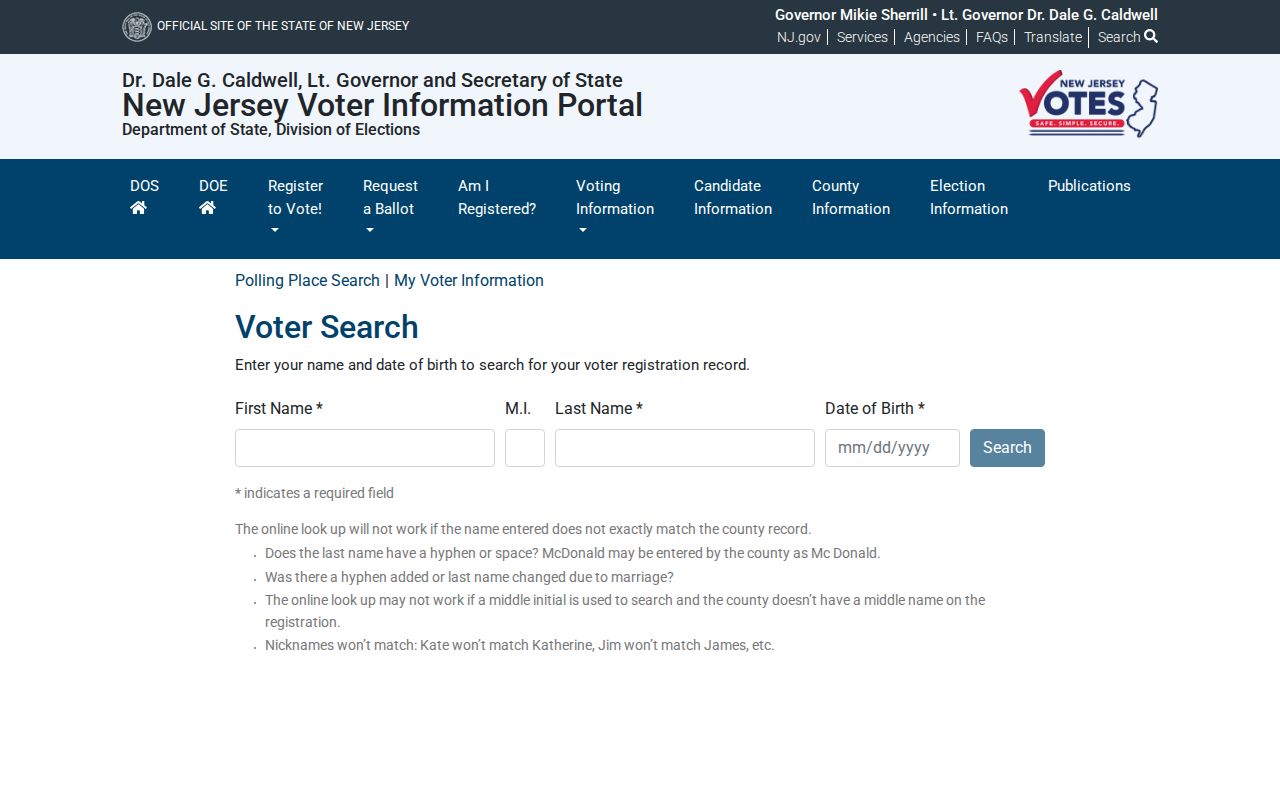
Voter-list requests in Mercer go through the OPRA process. It asks for a name, address, request particulars, and a noncommercial-use statement. The Superintendent of Elections serves as the operational custodian. Signatures, Social Security numbers, driver-license data, and protected addresses are withheld or redacted under the applicable law. Note: A voter record reflects election administration. It is not ballot choices or a census of everyone at the address.
Verify a Trenton Resident
Verifying a Trenton resident means anchoring a name to a dated, address-bearing result. Then test it against a second independent record. The City assessment route keeps a parcel's situs distinct from its tax mailing address. Mercer deeds add the legal description and the transaction parties. Court, business, or historical-directory material can separate two people who share a name. Conflicting evidence deserves a second look. Ask the actual custodian which field, form, or correction process applies.
- Record the name in usable variations: surname first, middle initial, maiden or married name, and known initials.
- Use a property, voter-status, or historical-directory result to obtain an address-bearing lead, while keeping situs and mailing address separate.
- Search the Mercer deed index or court party search with the name, municipality, date range, and any known block/lot or docket detail.
- Compare the person’s role, approximate date, municipality, spouse, relative, or occupation where a record actually supplies it.
- Request a custodian copy or clarification when a result must be confirmed, corrected, or understood in context.
- Docket
- A court’s case identifier. It links the case caption, venue, filings, and later actions.
- Index and image
- An index is a searchable record of key fields. An image is the underlying document or page, and access may be different.
- Certified copy
- A custodian-issued copy certified for the purpose allowed by that office. It may have identity, relationship, fee, or application rules.
A property result is a starting point, not a finished match. Keep the situs, mailing address, and transaction date separate before moving to another Trenton record.
Trenton Vital Record Access
New Jersey keeps vital records off any public online name search. That is deliberate. For a local copy of an event registered in Trenton, start with the local registrar. The State Department of Health holds the state-held route. The State Archives keeps historical material. Current records include births within 80 years, marriages within 50 years, deaths within 40 years, and all domestic partnerships and civil unions, which the Department treats as non-genealogical. A certified copy requires identity, a fee, and proof of relationship, and the Department notes that a certification or no-record statement does not always apply the same relationship rule.
The New Jersey vital-record ordering page collects the record type, full name, event date, event municipality or county, applicant contact information, relationship, purpose, identity documents, payment, mailing address, and certification type. State walk-in, mail, and VitalChek are separate channels. Local fees can differ too. The State lists $25 for an initial search and one copy or statement, with separate additional-copy and genealogy-year charges. Trenton’s posted death-certificate FAQ lists $20 for the first local copy and $5 for each additional copy in the same purchase. Confirm the current fee before ordering.
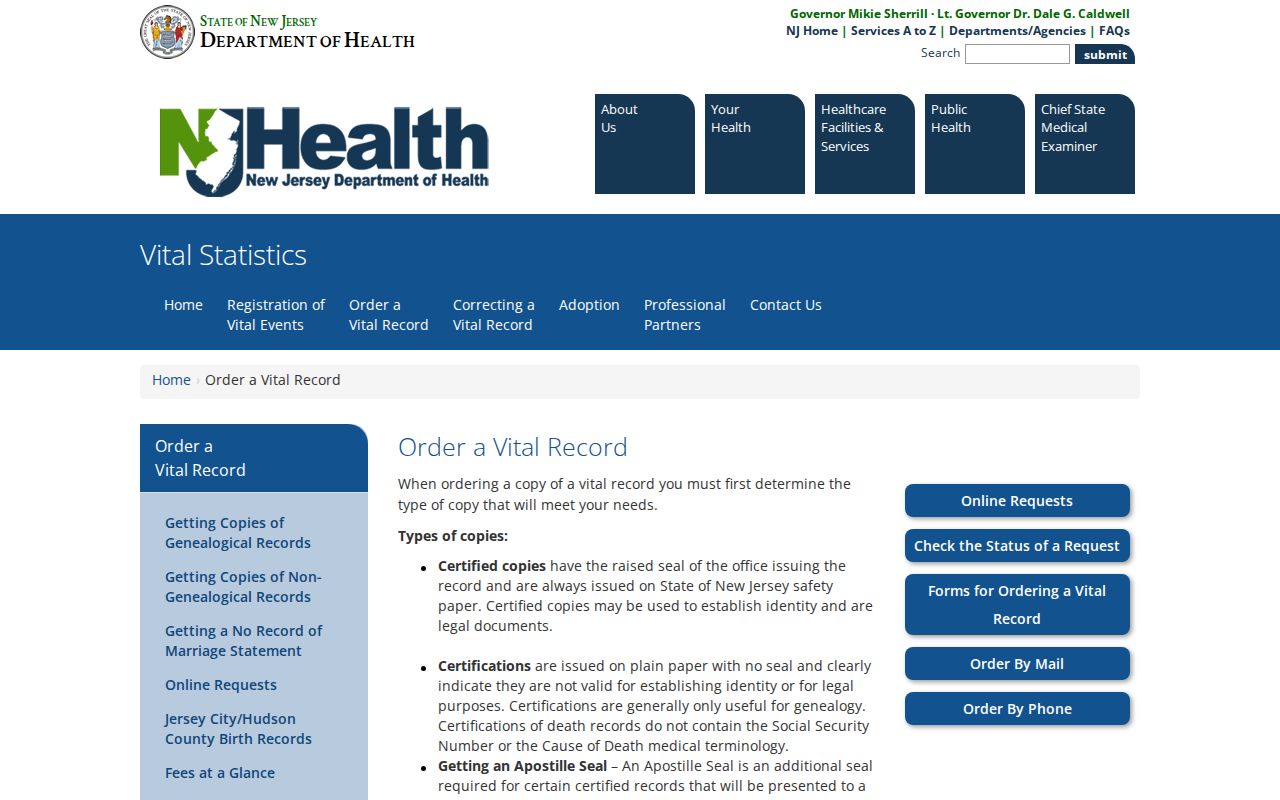
The order form itself drives the point home. A form is not a public search result. For historical research, the State Archives maintains births through 1924. Marriages and deaths run through 1950. Some periods have searchable historical databases. Older vital rolls pair well with a residents directory search.
Note: Adoption certificates remain confidential. Birth-parent and adult-adoptee questions belong with the official registry or confidential-intermediary process.
Trenton Record Name Variants
Same-name errors happen constantly. A deed names a party to a transfer, not necessarily whoever lives on the land now. A tax mailing address can belong to an attorney, trustee, company, estate, or former owner. An obituary is a historical lead only. Before accepting a match, compare a name variant, date, address or municipality, and record role. Keep the record source beside each note so a later correction stays traceable.
Mercer’s Property Alert shows why variants matter. Registration needs a username, password, and confirmed email. Alerts then run by municipality, block/lot, legal description, and optional party name, and county instructions call for separate variants: the name without a middle name, with an initial, and with the full middle name. An alert flags a matching recorded document. It does not flag a current occupant.
The Clerk index offers several routes. Search by party name, document type, date, consideration, instrument number, book/page, Town, lot/block, or legal description. Results show the document number, recording time, pages, consideration, legal description, parties, and linked or referring documents. When image access is unavailable, the records room is the documented fallback.
- Try the legal name and known prior versions.
- Compare a date and municipality before combining records.
- Read whether the person is an owner, party, agent, officer, executor, or witness.
- Return to the custodian when the index and document do not agree.
Note: Hold the uncertainty until two independent, date-consistent records point to the same person.
Trenton OPRA Record Requests
A broken or sealed index is not the end. Send a narrow request instead. New Jersey’s Open Public Records Act, N.J.S.A. 47:1A-1 et seq., uses a custodian-first approach and an adopted written request form. Trenton normally answers fast. The City says it grants or denies an available request within seven business days, though stored material can bring a notice of availability and cost. Inspection itself is fee-free. Ordinary City copy rates run $0.05 for a letter page and $0.07 for a legal page, and special service charges or estimated prepayment can apply.
Trenton’s online public-records request portal handles submissions. Ask for a named record, an address, a date range, or a record category. Name the record, not a private person. If a request is denied, the Government Records Council and Superior Court are the challenge routes.
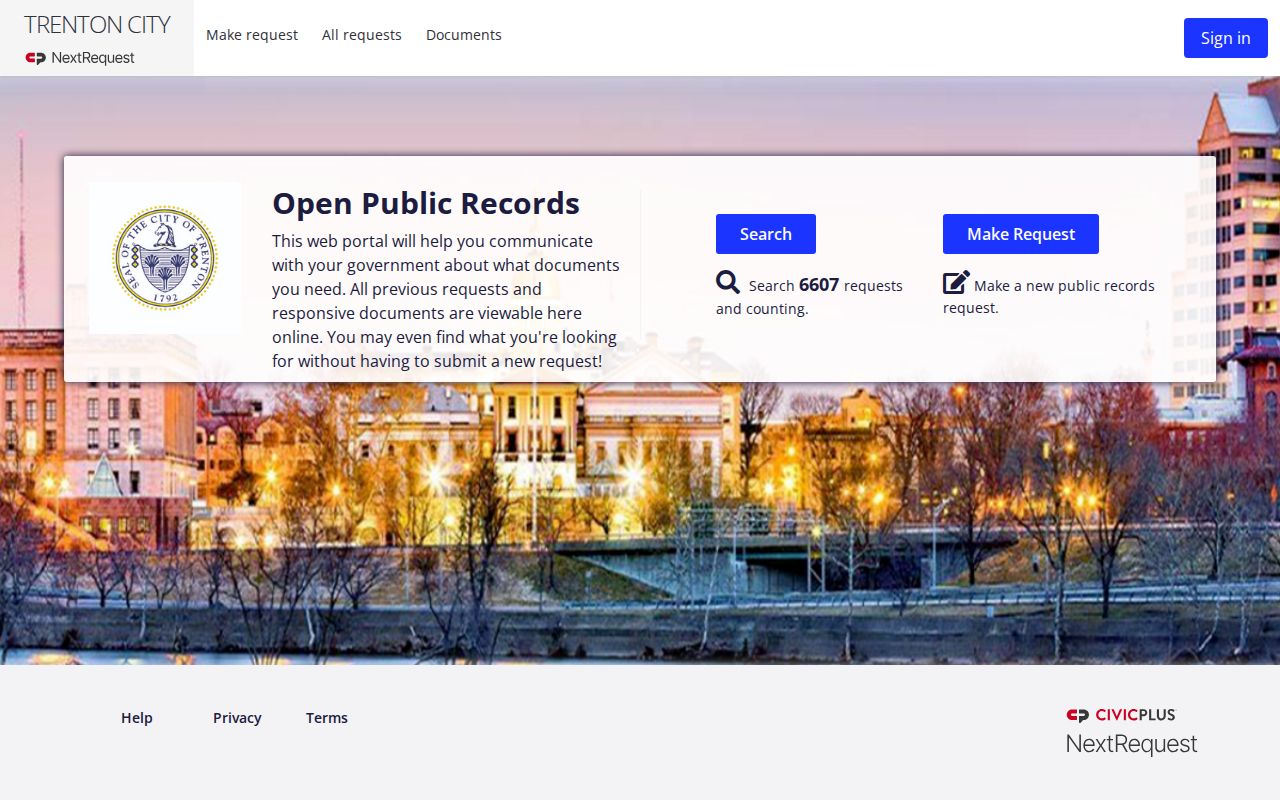
The portal is a fallback channel. It cannot replace the court, registrar, elections, or Clerk custodian. OPRA exemptions can require redaction of protected personal details, criminal investigatory material, and other protected classes of records.
Trenton Record Privacy Limits
New Jersey law guards personal address data closely. OPRA requires redaction of Social Security numbers, payment-card numbers, personal telephone numbers, driver-license numbers, and protected home addresses. That redaction applies in the circumstances stated by law. Daniel’s Law goes further. It lets covered public officials and immediate household members seek removal of home address and unpublished home telephone information from government websites. The Address Confidentiality Program gives an eligible participant a substitute address and mail forwarding. A missing address can be protected data.
New Jersey’s Consumer Data Privacy Act adds rights for qualifying consumers. Those rights concern personal data, subject to the Act’s publicly available-data and other exceptions. An official record is not an unlimited republishing license.
Lawful use. Use official Trenton records for personal, lawful research. New Jersey stalking and harassment laws prohibit using record details to threaten, follow, harass, or intimidate another person.
Trenton Historical Record Leads
Some questions call for older records rather than a current resident lookup. An heir search works best when you stack sources. Mercer probate and Surrogate files point toward the estate. Recorded deeds and executor or administrator references do the same. Obituary reporting helps too. For files from earlier generations, State Archives estate records may hold the key. A former classmate is a different trail. Trentoniana keeps city directories, telephone books, newspapers, census microfilm, and school yearbooks under one roof. Its Bobashela, Cathedral, and Immaculata runs can yield a year. They can also yield a club, an address, or a community tie. Check any such clue against a second dated source before trusting it.
Adoption questions follow one path only. New Jersey's official adoption and birth-parent system is the proper route. Public birth indexes should never be mined for confidential facts. Filing and credential questions are simpler. DORES can display entity status, a registered agent, officers, managers, addresses, and amendment dates. Licensing boards can show a license type and its standing. Neither one gives you a present home address. They establish a filing or credential relationship and nothing more. An older household trail matters sometimes. In that case the Trenton city directory collections hold historical volumes worth a look.
Note: Treat any yearbook, probate, or filing address as a dated lead. Then confirm the person and purpose with the office holding the record.